Wednesday, October 15, 2014

The Old Woman's Dream

 This past weekend I attended a wonderful workshop with Deena Metzger on writing, dreams and SoulCollage®  (about 35 SoulCollage® facilitators attended).  I can't put into words how profound it was for me, and how grateful I am.  I now have much to reflect upon, and lots more writing to do as a result.  One of the big questions raised was:  What is the new story?  Also:  What story are you given to carry?

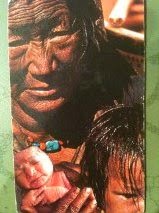
One of the writing exercises Deena assigned was to draw 3 of our cards and, in the order we pulled them, tell their story.  These are the cards I drew at random (sorry for the quality - they're photos from my phone):


     Here is the story that came to me:

     Once there was an old woman.  Her face was lined, her eyes deep and wise.  The woman was much beloved by her people and wore a necklace of turquoise and coral, given to her by the community as a token and sign of her position and regard.  Even so, she lived a simple life, spending her days caring for the grandbabies and honoring the gods and ancestors with offerings of cinnamon, cornmeal and flowers.  An outsider would only see her status by observing the numbers of people who visited her, seeking her advice and guidance.  She fed all who came to her home, but as time passed the younger generation began assuming much of the work that she had always done herself.  They cleaned her house, supplied her larder, washed her clothing and kept her supplied with the plant medicines and other items she needed. At first, she resisted allowing them to perform these services, but soon enough she recognized that she benefited from more rest.  And, besides, it was an honor for the children to serve, and she needed to give them that opportunity.  But the grandchildren she continued to care for with her strong and tender hands.
            One night, the old woman had a dream.  She found herself in an underground cavern full of large crystals.  Quartz grew in all directions, and it was beautiful.  On the floor of this cave an earth goddess reposed; she appeared to be sleeping.  The old woman wore a strange red garment and was reaching out to assist someone trying to climb up from below her.  A great blue butterfly appeared, and the old woman knew that it was a projection of her own soul.  She knew she should follow it, but she wanted to harvest some crustal to take with her.  And she had to help her fellow traveler. The butterfly was ascending, and she had to decide:  follow, or stay for the crystal, or help the other.
            When she woke up, the old woman called her community together.  she told them that she had dreamed a big dream.  Even before the dream came, she had been receiving messages about the future.  There were decisions to be made, and soon. A dark time was at hand.
            The old woman foretold of a time when the people would rush and hurry, moving so quickly and frantically through their lives that they appeared to her like dogs racing through the woods or forced to jump through hoops of fire.  There would be men who would build objects and structures both beautiful in a strange way and also deadly to the body and the soul.  The ancestors would loom as large as always, but the people would ignore them and they would seem frozen in place, unimportant.
            “This time will come,” said the old woman, after recounting her dream.  “What shall we do?”
            Some said they should attempt to rouse the sleeping earth goddess.  Some said they must bury crystals back in the earth as offerings.  Some said they must see if they must ensure that the ancestors not be forgotten.  Others refused to believe that they could fall so far from their practices and way of life.
            The old woman said, “I myself must pay attention and follow the blue butterfly of my soul.  If I do not, if I lose sight of it, then for me, all is truly lost.”  Then, she counseled those who felt so moved to make offerings, sing and dance to the earth goddess, to wake her up.  Others should bury crystals or be sure to offer helping hands to their companions.  Everyone should remember the ancestors.  But the must all act deliberately, and not with an urgency that welled up out of fear.
            “Time is a mystery,” she said.  “But if we cannot let it control us.  Honor it.  Respect it.  But do not allow it to dominate our lives.  We must live with and in all the worlds – dark, light, underworld, spirit world, middle earth – all of them.”
            “And what of this pollution of our way of life that is coming?  Must it come?” they asked.
            “I only see what the dream shows,” she replied.  “Whatever comes, we must keep together, remember the ancestors and spirits, and care for the children.”

Tuesday, September 30, 2014

My Husband Does the Laundry

I've been thinking about gender roles recently.  Last weekend I had the wonderful opportunity of being at a coming-of-age ritual for the granddaughter of a friend (my, the time!  I'd been at her mother's coming-of-age, too).  I also had a conversation with one of my daughters-in-law in which issues about motherhood came up.  The role that gender plays in parenting was only one aspect of our discussion, but it's a big one.  I know my generation of boomers wanted big changes in lots of areas of our lives, and I know many things are different, but to what degree, and how?  We're all feminists, right?  What can the young woman we blessed this weekend expect, as a woman?

Barry and I were in a gender group for about 10 years (it ended maybe 10 years ago) in which we explored through ritual and discussion any issues concerning gender that people wanted to pursue.  We joke now that we didn't know any more when the group ended than we did when it started.  What I did learn had little to do with gender, but rather with group dynamics.  (One thing was that groups constellate everyone's family of origin issues.  Another was that people have a hard time being direct and clear about their needs and desires.  A number of people left the group saying that they weren't getting what they wanted.  From my vantage point, they never asked or explained what they wanted.  Groups!  Very challenging!)  Gender issues are mysterious and run deep.

I have to admit that Barry and I fall into pretty stereotypical roles, for the most part.  I cook most of our dinners.  That's okay with me.  My cooking's a lot better, and now that I'm retired I'm enjoying cooking again.  Plus, we have a long-term house rule that the cook doesn't do the dishes.  Works for me!  Barry takes out the garbage, almost all of the time.  I do the housecleaning (though I wouldn't mind a little more help in this department - hint, hint).  He does repairs (he's good at it and learned to use tools as a kid; not me).  BUT... he does the laundry.  It wasn't always that way.  I remember a time when my Harvard-educated husband said he couldn't wash clothes because he didn't know how the washing machine worked.  Well, he does now.  When I was working many more hours than he was, and his work was all at home, he got the laundry chore.  It's something, I guess.

And you know, he folds the laundry much better than I do.

I hope things have changed more than superficially for the next generation.

I'm reminded of a poem I wrote a few months ago about how I learned to be a woman.  I guess the moral is that it's very difficult getting beyond our programming.  Here's the poem:

My Mama Told Me


My mama told me
            to be smart, to shine,
            just not more than boys.
My mama told me
            to pick up my messes
            and keep a clean house.
My mama told me
            to be on time,
            or punish myself if I can’t be.
My mama told me
            to help others
            and put my own needs last.
My mama told me
            to hold back my emotions
            and walk quietly.
My mama told me
            she would wash my mouth out with soap
            if I spoke the truth in vivid terms.
My mama told me
            to succeed,
            but not too much.
My mama told me
            to be a good girl,
            but to stick up for what is right.
My mama told me
            to choose my brain over my body,
            and so I left dancing behind.

My mama never told me
            that playing it safe
            meant not getting the gold.
My mama never told me
            how to be a mother,
            only that I had to be one.
My mama never told me
            how to give appropriately,
            neither too much nor too little.
My mama never told me
            there were consequences
            for holding back emotions.
My mama never told me
            that sarcastic comments
            would hurt me as well as others.
My mama never told me
            that there was value
            in trying to reach the stars.
My mama never told me
            why I should be afraid,
            only that I should be.
My mama never told me
            to love animals or
            my own animal body.
My mama never told me
            not to fear darkness,
            that it would hold me and nurture me.

I send blessings to my mama.
She did the best that she could.


Saturday, September 20, 2014

The Secrets of Elders

I've been working on another exercise from Writing for Your Life; it involves a fairy tale that enchanted one as a child.  There were several I could think of, but The Twelve Dancing Princesses was the first one that leaped into my mind.  So, off I went down the secret staircase and through the trees with leaves of gold, silver and diamonds.  (If you don't know or remember the story and want to read it, you can find a version here.)

Deena Metzger has a number of suggestions for working with the story.  I've imagined it from the point of view of the youngest daughter and from that of the old woman in the woods.  I've considered the deeper meanings of the story, what initiations it implies, and what the props of the tale might indicate.  It has been intriguing, as I've never truly considered the significance of the story.  What is most compelling to me is the figure of the old woman.  Why would she help the soldier become the next king?  How does she just happen to have a cloak of invisibility to bestow, and how does she know where the princesses go at night?

I began to see her very much as I see Gaia in the Persephone story.  Gaia creates the  fascinating flower for Hades as the means for him to capture the young goddess  Why would Gaia do that?  In all my studies of the myth, I never found an explanation for this, so I came up with one of my own.  Gaia saw the big picture.  She understood that Persephone needed to be in the underworld, and so she helped get her there.  This is far from a sentimental decision, but rather one that will cause great suffering.  However, it is ultimately necessary, and it places Perephone (who was originally an underworld goddess before the patriarchal culture took over) where she belongs.

So, I see the old woman of the woods as a Gaia-like figure.  Perhaps the kingdom, which has recently been at war, needs the wounded and experienced soldier to be the next king, rather than another uninitiated and privileged young prince.  Perhaps the princesses need to grow up.  Could they really go on dancing their shoes off every night forever?  Still, it is sad to see the end of their time in the magical world under the earth, as it is sad to see the innocent Persephone dragged down to her darker underworld.

If you've been reading this blog for a while, you know I've been dwelling quite a bit on issues of aging.  The old woman archetype has been and continues to be important to me.  May Sarton's poem When a Woman Feels Alone has been working me for a few years now.  Strength, laughter, endurance - these are the words of wisdom from the old woman.  Here is my take on why we need her:

There is an initiation
you must receive if
you wish to know
the secrets of elders,
but few have received it,
so you must ask the right ones.
What they tell you
will make your walk into
old age bearable.
I cannot tell you the secret,
but I can say this:
Seek that initiation and
you will lose your fear.


May we all ask the right ones and get that initiation!


Saturday, September 13, 2014

The Poetic Conversation

The oral tradition and its revival have been central to our lives in the last 20 years or so, and I wanted to talk about why that is.  Those of us participating in salons and events like last week's Rumi's Caravan have found that it is a way to restore our spirits in these dark and confusing times.  It's not that we want to ignore the world's troubles (although sometimes I wish I could) or numb out to them; in fact, sometimes the feeling can go very deep and very dark in these events.  But somehow, by the end of the evening, I leave feeling nourished in a profound way.  As my friend Larry says, we are trying to restore the soul of the world.

What's really fun about salons and Rumi's Caravan is that we try to get into what we've been calling a "poetic conversation."  No one knows what poems are going to brought in or by whom, even in the performance events.  When it's working really well, one poem leads to another, in theme, or by the same poet, or with a similar image.  I felt that Rumi's Caravan in Oakland last week truly accomplished this.  We also had another opportunity to present later on in the week, at a retirement community in Marin County.  At this event, there were only four of us presenting, but it really did become a poetic conversation, the mood flowing and changing from very soulful and dark to humorous and playful.  It was so much fun!  And we received such appreciation afterwards.

When you bother to work on a poem or a story to be told by heart, something happens beyond just memorizing words.  The piece works you.  You wouldn't bother learning it if it didn't mean something to you to begin with, but it really lives in you after that.

All of this is why we do what we do.

Barry found a line from Rumi that I want to share  - "Learn things by heart because they die of cold on the page."

Because of the conversational aspect, some pieces you carry don't make it into the event.  I had wanted to do this poem of mine at the Caravan, but it never fit in.  So, I get to share it here.  It's called, "We Are All Pilgrims."

We are all pilgrims.
Some worship at the temple of materialism.
Some linger in the warm pools of Aphrodite.
Others trek to mountain peaks
or hidden springs,
seeking the source
of mystery itself.
But we all journey somewhere.
We are all pilgrims.

The roads we travel –
the dusty miles,
the muddy rain-soaked roads,
the twisting uphill trails -
drag on, so arduous and long,
with no endpoint in sight.

But then, one day,
you look into a mirror, or
catch your reflection
in still water,
and you see
that you have grown old.
Suddenly, a different destination looms.

You cry out –
I’m not ready!
Now you understand that
it was never arriving
that mattered.
You know –
deeply and without doubt –
that the pilgrimage itself
was the point.
All of those hours lost
in complaint, confusion and misery –
you realize that they were
opportunities ignored and departed.

Even now,
walking the great camino,
you rouse – repeatedly –
from drifting moments.
You desperately want
to stay open-eyed
and grateful.
But even our failures are the journey.
And we are all pilgrims.


Saturday, September 6, 2014

Of Aardvarks and Elders

My last post was "Walking Through Walls."  Something synchronous and magical happened this week on that topic.  I worked on a dream with my dream group the other night.  It was a short and rather pleasant dream (unusual, that!) in which I was walking with an old friend along a series of beaches.  We passed the last ones that had shade trees, looking for one where we'd want to hang out.  We came to a cove that had a small waterfall, and we turned in to head there.  As we walked up the path towards it, an animal passed by us, headed in the opposite direction.  For some reason, I thought it was an anteater, but when we looked at pictures of anteaters in the group, I knew it wasn't.  The next day, I began looking at animal pictures and pretty quickly ran across what it was - an aardvark.

I googled "spiritual meaning of aardvarks" and discovered that some magicians in Africa use parts of the aardvark for magical purposes, one of which is to allow a person to walk through walls!  I love that.

One of the other main associations with aardvark is fearlessness.  Boy, this simple little dream had plenty to tell me.  If you know the Enneagram, you know that the major fear-based personality is the six.  That's me.  It's a trial, believe me; my first reaction to almost everything is to go into fear.  I need more aardvark energy, for sure.  This past week, I had a big opportunity to work on it.

Barry and I were at a friend's wedding and had given a ride to another friend who is an elder and very dear to us. (I have been so fortunate to have a number of friends who are a good bit older than me and who are tremendous role models for what an elder can be.  She is one.)  After the ceremony, she got quite weak and almost passed out.  We had to watch her taken away in an ambulance, and we followed to spend the rest of the evening in the ER, rather than at the reception.  It was an honor to do so with her (and she is recovering and will hopefully be fine, but we all learned something about the need to eat, hydrate, and stay out of the hot sun).  But right in my face were the prospects of getting old, loss of loved ones, illness and mortality.  I have to say, I've been spending a chunk of time on these considerations recently, anyway. Welcome to the fearful world of the six!

I made a SoulCollage® card a few months ago that has become a guiding image for me.  I call her Wisdom Keeper.  She's old, and she's beautiful.  It became clear to me not long after I made the card, which was just after my 65th birthday, that she was to be my teacher for the next 5 years, until I reach 70 (if I am lucky enough to get there).  She and I have had some excellent conversations.

Here she is.


 I guess I need to make an aardvark card now, to keep her company.

There was other good stuff in the dream.  I'm still working on it.